
Multifamily
Value-Add Funds
Acquiring distressed Class B and C multifamily properties at significant discounts, executing targeted value creation, and returning investor capital through refinance — with continued cash flow through eventual exit.
The multifamily distress cycle has arrived — and disciplined operators will define the next decade.
Rising interest rates, over-leveraged sponsors, and floating-rate debt maturities have created the most significant multifamily buying opportunity in over a decade.
The multifamily market spent the last cycle chasing yield with aggressive leverage and thin cap rates. As rates rose, debt-service coverage collapsed on a wide swath of syndicated deals — and the resulting distress is now working its way through the market as loans mature and lenders force sales.
Ninety9 Capital's Multifamily strategy is built for this environment. We acquire Class B and C multifamily properties at significant discounts to replacement cost, execute targeted renovation and lease-up programs to stabilize occupancy at 90%+, and refinance to return a substantial portion of investor capital — often within 12 to 24 months of acquisition.
What sets us apart is vertical integration. Our in-house team handles renovation, leasing, and property management directly — giving us the operational control needed to execute value-add plans on schedule and on budget, without the misaligned incentives that come with third-party operators.
A two-phase capital cycle designed to return principal early and compound yield after.
Target returns, hold periods, and refinance outcomes are projections based on our underwriting and are not guarantees. Actual results will depend on market conditions, deal-specific execution, financing availability, and other factors described in each fund's Private Placement Memorandum. Past performance is not indicative of future results.
Key terms and structure.
All terms above are provided for illustrative purposes and are subject to the fund's Private Placement Memorandum (PPM), which governs in the event of any conflict. Target hold periods, minimums, capital returns, and annualized returns are subject to change and are not guarantees. See offering documents for complete terms, risk factors, and eligibility requirements.
Focused on the Sun Belt — where multifamily fundamentals remain strongest.
Our Multifamily strategy targets four Sun Belt metros with strong population growth, employment diversification, and deep multifamily inventories — the markets where distressed opportunities are most concentrated and where operational infrastructure supports execution at scale.
Headquartered in Dallas–Fort Worth, we have direct access to the largest and most active of these markets — with expanding operational reach across Houston, San Antonio, and Atlanta.
Live acquisitions — capital deployed, work underway.
We entered the multifamily space at the front edge of the distress cycle rather than chasing the peak. Below are the assets currently in our portfolio — each acquired at significant discount to replacement cost and actively being repositioned through our vertically-integrated operating platform.

The Flats
Acquired at approximately 30% below market value at the front of the distress cycle. Value-add plan executed on schedule: renovations completed, occupancy stabilized above 90%, and the refinance to return investor capital is now underway.

Apex
Acquired for $7.75M against a 2025 appraised value of $16M — one of the clearest examples of the distress-cycle pricing dislocation we underwrote for. Value-add plan is now in execution, following the same playbook proven at The Flats.
The properties shown are held through fund-specific SPVs and represent current acquisitions in the Ninety9 Capital multifamily program. Both vehicles are closed to new investment; property details are provided for informational purposes only. Purchase prices, appraisals, occupancy figures, and refinance status reflect activity to date and are not a projection or guarantee of future fund performance. Fund-specific financials and property-level data are available to verified accredited investors upon PPM review.
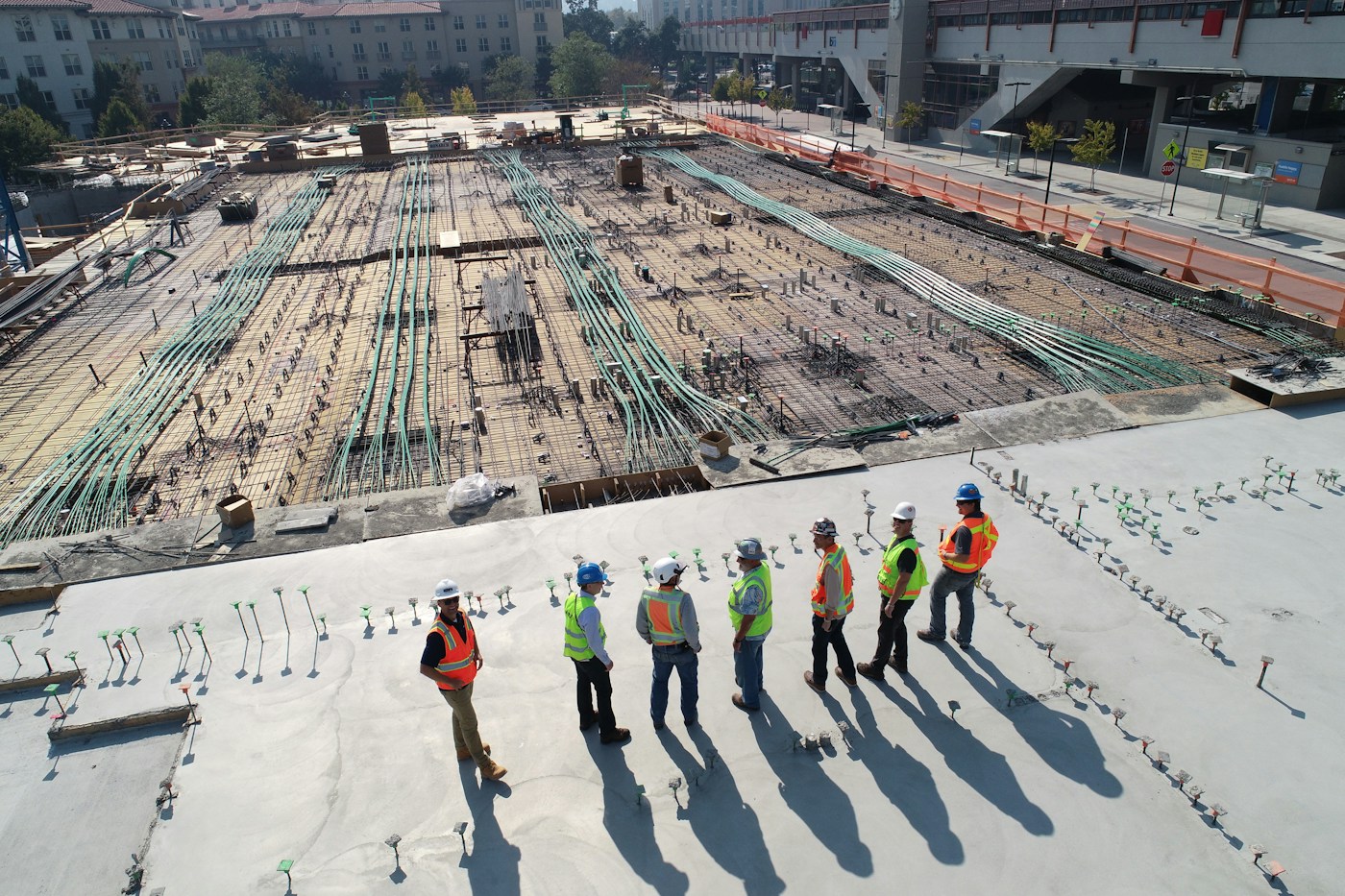
Vertical integration — the operating advantage.
Most multifamily syndicators rely on third-party property management, third-party construction, and third-party leasing. That structure creates fee layers, misaligned incentives, and execution risk.
Ninety9 Capital handles renovation, leasing, and property management in-house. Our operating team has more than two decades of experience across residential real estate, giving us direct control over the levers that determine whether a value-add plan hits its numbers.
How to invest — step by step.
Frequently asked.
The fund is available exclusively to verified accredited investors as defined under Regulation D of the Securities Act. Accreditation must be verified prior to subscription — self-certification is not sufficient.
The minimum investment is $50,000, subject to fund-level acceptance. Higher commitment tiers may be available with additional terms — please contact investor relations to discuss.
Phase One (Years 1–2) focuses on value creation: acquiring distressed assets, executing renovations, stabilizing operations, and refinancing to return 30–90% of committed capital back to investors. Phase Two (Years 3–5+) is the yield-and-exit phase, where investors continue to receive distributions on their remaining capital targeting 20–30% annualized returns, before the asset is sold and remaining principal is returned. Actual timing and outcomes are subject to market conditions.
The fund is offered under Regulation D as a private placement, with both Rule 506(b) and Rule 506(c) offerings available depending on investor circumstances. Investors participate as limited partners and receive K-1 tax reporting annually. Full structure details are provided in the fund's Private Placement Memorandum.
The multifamily market is experiencing its most significant distress cycle in over a decade, driven by rising interest rates, over-leveraged sponsors, and maturing floating-rate debt. Distressed opportunities are entering the market at meaningful discounts to replacement cost — creating an entry point that disciplined operators can convert into significant value.
As a real estate investment, the fund generates depreciation that is passed through to investors via annual K-1s — often offsetting a meaningful portion of taxable distributions. Bonus depreciation and cost segregation strategies may apply. Consult your tax advisor regarding your specific situation.
The fund is designed as a five-to-seven-year hold across the full two-phase cycle. Early liquidity is not guaranteed and any secondary transfer is subject to the operating agreement, general partner consent, and applicable securities laws. Note that the Phase One refinance is designed to return a substantial portion of your invested capital within the first 12–24 months.
Interested in learning more?
Ninety9 Capital's funds are available exclusively to verified accredited investors. Reach out to our investor relations team to discuss whether this fund fits your portfolio.
This page is for informational purposes only and does not constitute an offer to sell or a solicitation of an offer to buy any securities. Any offer will be made only pursuant to a Private Placement Memorandum (PPM) provided to eligible investors. Investors must complete accreditation verification prior to subscription.
Forward-looking statements, target returns, capital-return projections, and hold-period estimates are inherently uncertain and are not guarantees of future performance. Investments in private funds involve significant risks, including illiquidity, potential loss of principal, and limited transferability. Value-add strategies involve additional operational and execution risks that could impact projected outcomes. Consult your own legal, tax, and financial advisors before investing.
Contact Investor Relations
Our team is ready to answer your questions and help you evaluate whether our funds align with your portfolio goals.